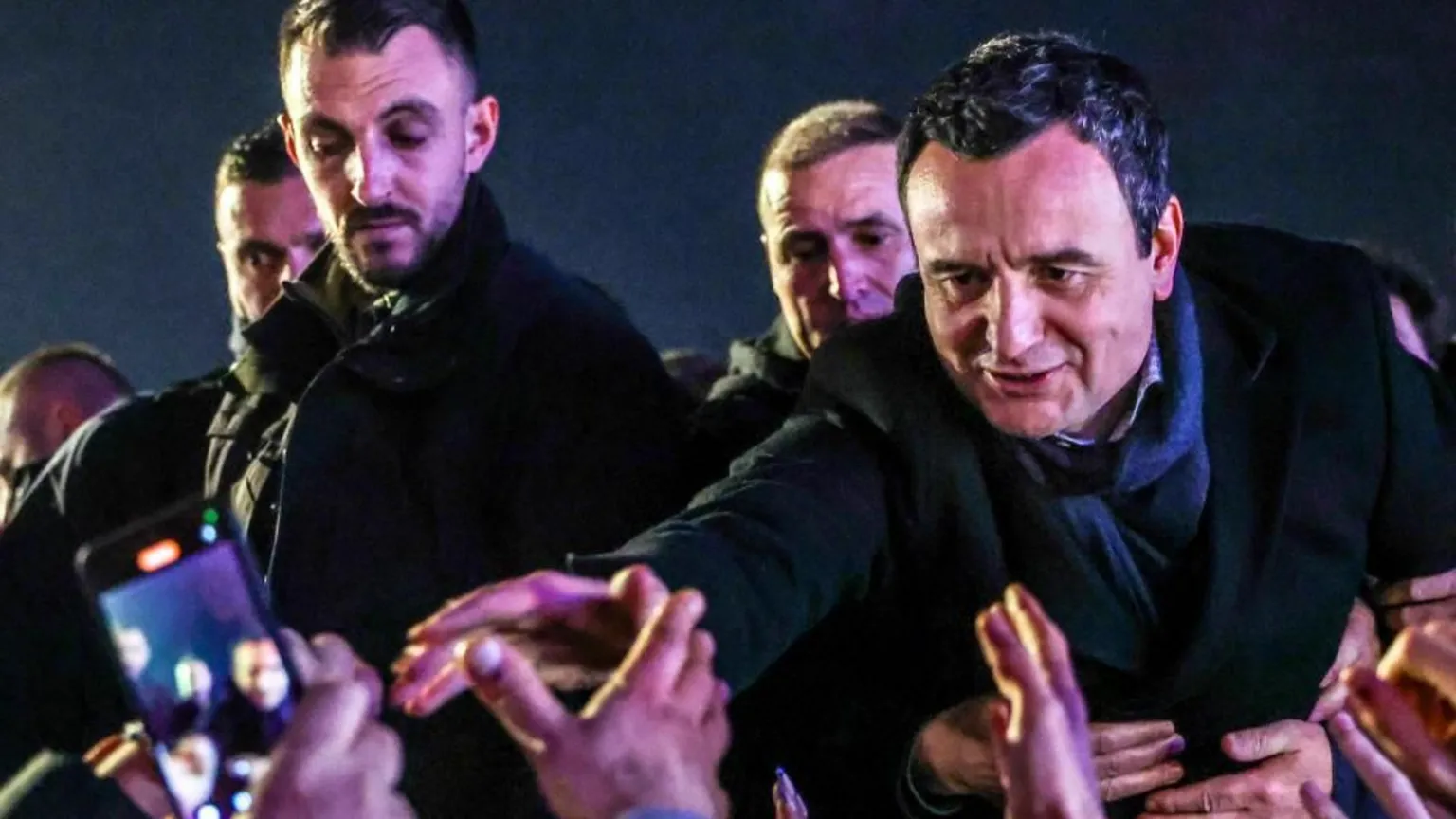
Kosovo’s long political standstill is set to ease after voters delivered a decisive win to the ruling Vetevendosje party in a repeat parliamentary election held after months without a functioning government.
Early results show the Albanian nationalist movement securing a commanding lead, with 90% of votes counted placing it at 50.8%.
The outcome clears the path for party leader Albin Kurti to return to office for a third term, following a year marked by stalled institutions and failed coalition talks.
The Democratic Party of Kosovo placed second with 20.98%, while the Democratic League of Kosovo came third on 13.89%.
The vote was the country’s second parliamentary election of the year, triggered after the February polls failed to produce a working majority.
Vetevendosje emerged as the largest party in that earlier vote but fell short of forming a government on its own.
Opposition parties declined to back Kurti, leaving the National Assembly paralysed for months and forcing the country back to the polls.
The renewed election therefore became a referendum on the deadlock itself. Voters were asked to decide whether responsibility lay with Kurti’s leadership or with opposition groups that refused to enter a coalition with his left-wing movement.
The result delivered a clear signal. Although the party may still need partners to reach a governing majority, Kurti is expected to find sufficient support among ethnic minority representatives, who hold 20 of the 120 seats reserved in parliament.
This marks the fourth consecutive parliamentary victory for Vetevendosje and strengthens Kurti’s political standing after his earlier failure to assemble a government.
Celebrating the outcome, he described it as “the greatest victory in the history of the country” and said he expected rivals to work with him rather than block the process again.
That message appeared to resonate with at least one opposition figure. Arben Gashi of the Democratic League of Kosovo acknowledged the scale of the vote, writing: “When voters speak, the result cannot be ignored.” He added: “Reflection and responsible action are required.”
Beyond domestic politics, the consequences are significant. Kosovo has been unable to access hundreds of millions of euros in European Union funding due to the absence of a fully operational government.
Kurti has also pointed to potential World Bank deals that could push total support beyond €1bn if stability returns.
Relations with key international partners remain fragile. Brussels and Washington criticised Kurti’s government for moves against services used by the Serb minority, including health facilities and postal offices, actions that heightened tensions in the Serb-majority north.
While the EU has now agreed to lift the restrictive measures imposed in 2023, it is expected to press Kurti to adopt a more flexible stance in the stalled talks aimed at improving ties with Serbia.
Progress may prove difficult, given his strained relationship with Serbian President Aleksandar Vucic.
Voters’ strong backing of a polarising leader also reflects frustration with the alternatives. Parties linked to the former Kosovo Liberation Army dominated politics after independence in 2008 but failed to meet public expectations on economic growth and living standards.
Political analyst Artan Muhaxhiri highlighted Vetevendosje’s record, pointing to “countless violations of the constitution, the lack of economic development and the breakdown of relations with allies.”
Yet he said voters ultimately made a comparative judgment, concluding that “despite all the shortcomings, citizens have considered the opposition to be more harmful.”































Comments
Sign in with Google to comment, reply, and like comments.
Continue with Google